History
The History Department is passionate about helping pupils develop a meaningful interest in the past, while also building a wide range of valuable, transferable skills. We believe that learning History should be engaging and enjoyable, and our dedicated teachers work hard to support every child in reaching their full potential.
We aim to show pupils why History matters—not just as an academic subject, but as a way of understanding the world around them. Through studying History, your child will gain essential skills that will benefit them throughout their education and beyond, including:
- Strong literacy and communication
- The ability to recall, select, and use information effectively
- Critical evaluation of written and visual sources
- Independent research skills
- Analytical thinking
These skills help prepare pupils to become thoughtful, informed contributors to society and the workplace. We hope to spark a lifelong interest in History that will stay with them forever.
Career Pathways
Studying History equips pupils with a wide range of high-level, transferable skills that are highly valued by universities and employers alike. These skills—such as critical thinking, research, communication, and analysis—open doors to a diverse array of career options.
Many of our former pupils who studied History at A Level have gone on to successful careers in fields such as:
- Accountancy
- Business and Finance
- Retail Management
- Town Planning
- Medicine and Dentistry
- Veterinary Science
- Primary and Secondary Teaching
- Politics
- Law
- Policing
History is not just about understanding the past—it’s about preparing pupils for a successful future in a rapidly changing world.
“Studying History taught me how to think critically, ask better questions, and understand the world beyond headlines. It was the foundation for my career in law.”
— Former pupil
“History wasn’t just about dates and facts—it was about people, decisions, and consequences. It helped me see patterns and possibilities in my work as a journalist.”
— Former pupil
Trips and Visits
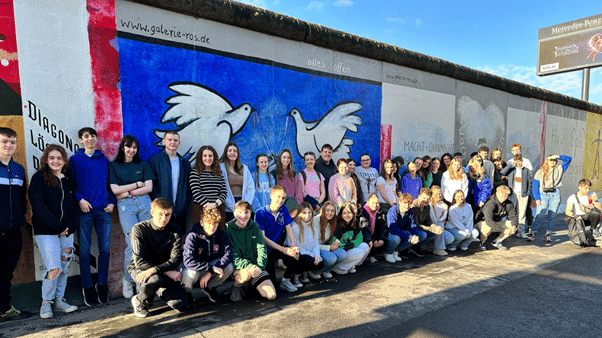
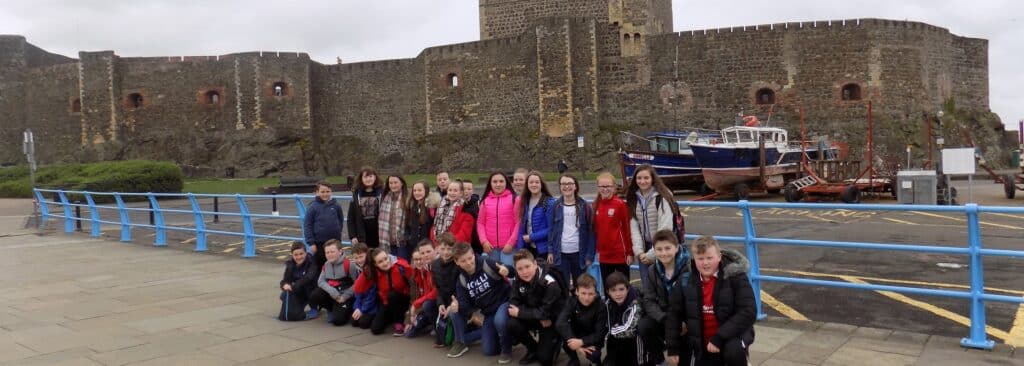
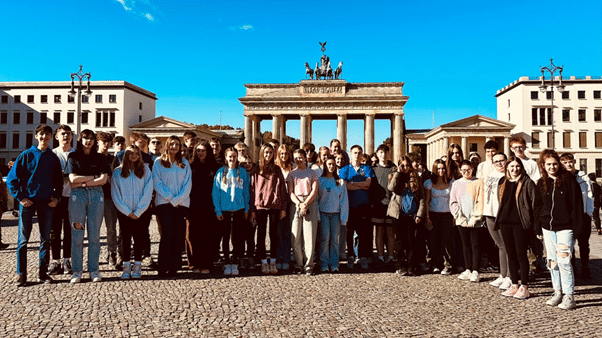
Educational visits play a vital role in enriching pupils’ understanding of History and bringing the subject to life. Our department regularly organises trips that offer powerful, real-world learning experiences. Pupils have had the opportunity to visit France and Belgium to commemorate World War I, explore Berlin’s complex past, learn about Irish history in Dublin, and reflect on the Holocaust during a visit to Auschwitz.
These experiences deepen pupils’ historical knowledge, encourage empathy and reflection, and help them connect classroom learning with the wider world. They are often among the most memorable and impactful moments of a pupil’s school journey.
At Coleraine Grammar School, we believe that studying History provides pupils with far more than knowledge of the past—it equips them with the skills and understanding needed to thrive in the modern world. Our History curriculum encourages curiosity, critical thinking, and informed debate, helping pupils become thoughtful, articulate, and well-rounded individuals. With a strong emphasis on academic achievement and personal growth, our department supports pupils at every stage, preparing them for success in further education and future careers. We are proud to offer a subject that not only enriches minds but also builds character.